

Introduction
Language is more than a collection of words used to communicate information. It is also a creative tool that allows people to express humor, emotions, imagination, and intelligence. One of the most entertaining ways to experiment with language is through wordplay, where words are arranged or interpreted to create unexpected meanings. Understanding Puns Meaning helps readers appreciate how simple expressions can become humorous through clever combinations of sounds, spelling, and context. Whether someone enjoys funny jokes, creative writing, or entertaining conversations, learning about wordplay can make everyday communication more interesting.
Puns have existed in different languages and cultures for centuries, appearing in literature, theater, poetry, advertising, and ordinary conversations. Their popularity comes from the surprising connection between words that sound similar or carry multiple meanings. A single sentence can communicate two different ideas, creating an amusing moment when the listener recognizes the hidden interpretation. This playful quality makes word-based humor appealing to people of different ages, educational backgrounds, and interests.
In today’s digital environment, wordplay has become even more visible through social media captions, memes, advertisements, online conversations, and short-form videos. People frequently use clever expressions to capture attention and make their messages memorable. Understanding the structure and purpose of these expressions can improve vocabulary, strengthen communication skills, and encourage creative thinking.
What Is the Meaning of a Pun in English?
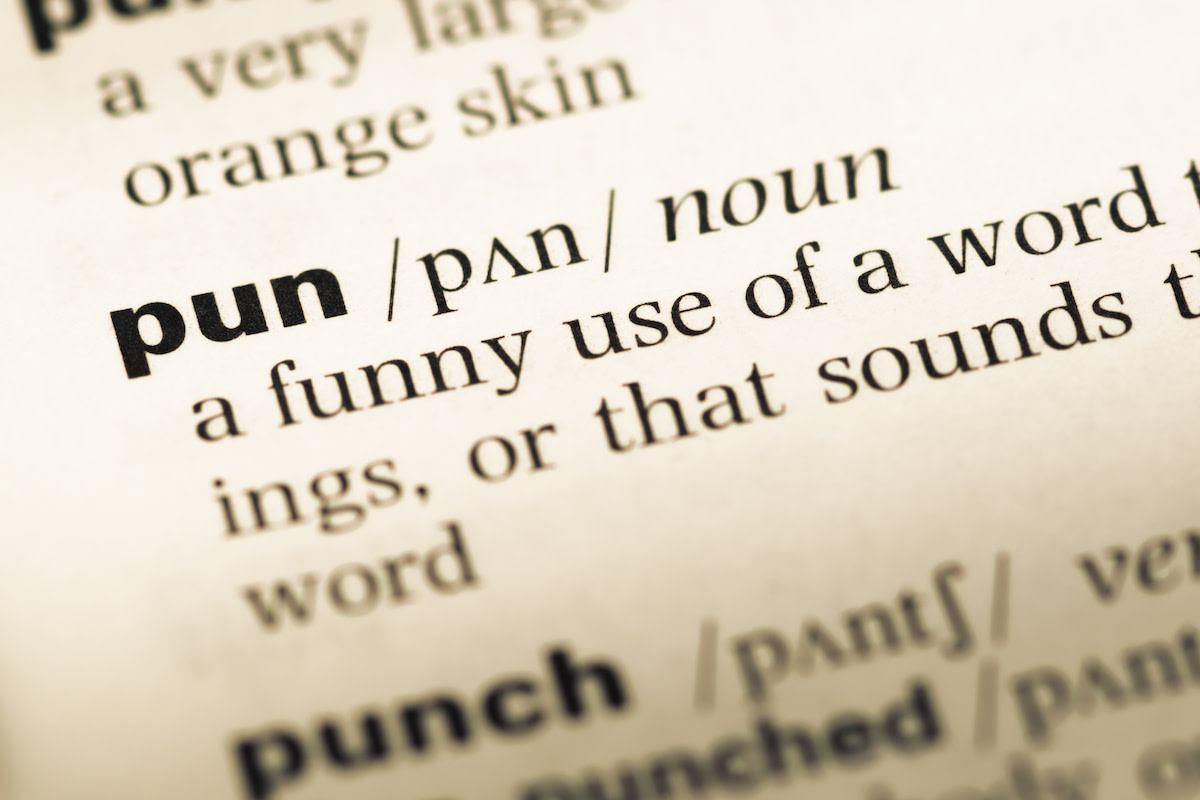
A pun is a form of wordplay that creates humor or an interesting effect by using words with multiple meanings or words that sound similar but have different meanings. The joke usually depends on the audience recognizing two interpretations of the same expression. Unlike ordinary jokes that rely on storytelling or unexpected situations, a pun uses the characteristics of language itself to produce amusement.
For example, consider the sentence, “I used to be a baker, but I couldn’t make enough dough.” The word “dough” refers both to the mixture used for making bread and to money in informal English. The sentence becomes humorous because both interpretations fit the situation. Understanding Puns Meaning involves recognizing this relationship between literal and figurative interpretations. The humor appears when the brain connects the two meanings and discovers the unexpected connection.
This type of humor is sometimes described as clever, playful, or deliberately silly. Some examples produce immediate laughter, while others require a moment of thought. The effectiveness of a pun depends on vocabulary, cultural understanding, timing, and the listener’s ability to recognize the intended double meaning.
Understanding the History and Evolution of Wordplay
Wordplay has a long history that reaches back to ancient civilizations, where writers and speakers experimented with language to entertain audiences and communicate complex ideas. Ancient Greek and Roman literature included examples of verbal humor, double meanings, and clever expressions. These techniques demonstrated how language could communicate more than its literal message. Over time, wordplay became an important feature of storytelling, theatrical performances, and poetry.
During the Renaissance, writers such as William Shakespeare frequently incorporated verbal humor into their plays. His characters used double meanings to create comedy, express romantic feelings, and reveal personality traits. Such expressions also allowed playwrights to introduce humor into serious situations without interrupting the story. As literature developed, wordplay continued to appear in novels, newspapers, cartoons, and public speeches.
Modern communication has expanded the possibilities for verbal creativity. Digital platforms allow humorous expressions to spread rapidly, sometimes reaching international audiences within hours. Although language and cultural references continue to change, the basic principle remains the same: an unexpected connection between words can create an entertaining experience.
Different Types of Puns and How They Work
Not every pun follows the same linguistic pattern. Some depend on identical sounds, while others rely on multiple definitions or creative sentence structures. Understanding these differences helps readers identify why particular expressions are funny and how writers construct them.
1. Homophonic Puns
Homophonic wordplay occurs when two words sound alike or nearly alike but have different meanings and often different spellings. The humor comes from replacing an expected word with another that produces a surprising interpretation. This technique is particularly effective in spoken language because listeners hear the similarity before recognizing the difference.
For example, “The bicycle couldn’t stand on its own because it was two-tired.” The phrase “two-tired” sounds like “too tired,” connecting the bicycle’s two tires with the feeling of exhaustion. Another example is “The calendar’s days are numbered,” which combines a familiar expression about limited time with the literal numbers printed on a calendar. Such expressions are easy to remember because their humor depends on familiar vocabulary and recognizable situations.
2. Homographic Puns
Homographic wordplay uses words that share the same spelling but have different meanings. Depending on the words involved, their pronunciations may also differ. The humor develops when one written word supports more than one interpretation, allowing the reader to understand the sentence in an unexpected way.
Consider the sentence, “A boiled egg is hard to beat.” The word “beat” can refer to defeating something or mixing an ingredient vigorously. Similarly, “The fisherman was hooked on his hobby” uses “hooked” to suggest both fishing equipment and strong enthusiasm. These examples demonstrate how everyday vocabulary can create entertaining connections without requiring complicated sentence structures.
3. Compound Puns
Compound wordplay combines two or more playful expressions within the same sentence or short passage. Rather than depending on one double meaning, it introduces several related linguistic connections that strengthen the humorous effect. This technique often appears in comedy writing, advertisements, and humorous storytelling.
For example, “The electrician was shocked when his career lost its spark.” The words “shocked” and “spark” connect electrical terminology with emotional reactions and declining enthusiasm. The combination creates a stronger theme than either expression would produce independently. Compound wordplay requires careful construction because too many unrelated references can make a joke confusing rather than entertaining.
4. Recursive Puns
Recursive wordplay depends on the audience understanding another joke, expression, or familiar phrase before recognizing the new humorous interpretation. The joke builds upon existing linguistic knowledge, making the connection more satisfying for readers who recognize the reference.
For example, a joke that modifies a familiar saying may become funny because the audience remembers the original expression and notices the unexpected change. This technique is common in literary humor, online communities, and specialized professional conversations. It can be particularly effective among audiences who share similar interests, although unfamiliar references may make the joke difficult for outsiders to understand.
5. Visual Puns
Visual wordplay communicates humor through pictures, symbols, or combinations of images and text. Instead of depending entirely on spoken or written language, it uses visual representations to suggest multiple meanings. This technique is especially common in cartoons, logos, advertisements, and internet memes.
Imagine an illustration of a computer mouse wearing a tiny crown with the caption “The ruler of the clicks.” The image connects the computer accessory with the idea of authority. Visual humor often works quickly because audiences can understand the image and accompanying words together. Its popularity has increased with image-based communication, where a clever visual expression can communicate a joke in seconds.
Comparison of Common Types of Wordplay
Different linguistic techniques create humor in different ways. The following table explains their basic characteristics and provides simple examples.
| Type of Wordplay | Main Feature | Example |
|---|---|---|
| Homophonic | Similar pronunciation | A bicycle was two-tired |
| Homographic | Same spelling, different meanings | A boiled egg is hard to beat |
| Compound | Multiple word connections | The electrician lost his spark |
| Recursive | Depends on another familiar expression | A playful variation of a known saying |
| Visual | Combines images and language | A computer mouse wearing a crown |
Although these categories overlap in certain situations, each demonstrates a different approach to linguistic creativity. Recognizing the distinctions makes it easier to understand how humor develops through sound, meaning, and context.
Why Wordplay Makes People Laugh
Humor frequently emerges when expectations are interrupted in a harmless and surprising way. During ordinary communication, the brain automatically selects the most likely meaning of a word based on the surrounding sentence. Wordplay challenges this expectation by introducing another interpretation that also makes sense. The moment of recognizing the unexpected meaning can produce amusement because the listener experiences a small intellectual surprise.
Understanding Puns Meaning also involves recognizing the relationship between language processing and creativity. When someone hears a clever expression, the mind may briefly consider competing meanings before identifying the intended connection. This mental activity can make verbal humor especially satisfying. However, not every person responds to the same joke in the same way. Cultural background, language familiarity, personal preferences, and the social situation all influence whether an expression feels funny, confusing, or predictable.
Timing also matters. A humorous expression delivered naturally during conversation may be more effective than one that interrupts a serious discussion. Successful wordplay often depends on the speaker understanding the audience and choosing language that feels appropriate to the moment.
The Role of Puns in Everyday Communication
Verbal humor can make conversations more engaging by introducing creativity into otherwise ordinary exchanges. Friends often use playful expressions to entertain one another, while teachers may use them to make lessons memorable. In workplaces, a lighthearted remark can sometimes reduce tension and encourage friendly interaction. These benefits depend on context, because humor that works in a casual setting may not be suitable during a sensitive professional discussion.
Wordplay also supports memorable communication. A clever phrase can attract attention because it differs from predictable language. For example, a coffee shop might advertise, “Espresso yourself,” combining the name of a coffee drink with the phrase “express yourself.” This creates an inviting message while reinforcing the business’s connection to coffee. Similar techniques appear in greeting cards, restaurant menus, event invitations, and product descriptions.
The most effective expressions are generally easy to understand and closely related to the subject. When a joke requires too much explanation, its impact may weaken. Clear language, relevant context, and natural delivery help verbal humor feel entertaining rather than forced.
How Wordplay Improves Vocabulary and Language Skills
Learning to recognize multiple meanings can encourage people to explore vocabulary more deeply. Instead of memorizing a word as having only one definition, learners begin noticing how its meaning changes according to context. This awareness is particularly useful when studying English because many common words have several definitions, idiomatic uses, and informal interpretations.
For students and language learners, understanding Puns Meaning can make vocabulary practice more enjoyable. A familiar joke may encourage someone to investigate an unfamiliar expression, compare similar-sounding words, or explore how idioms work. Teachers can incorporate simple examples into classroom discussions to demonstrate pronunciation, spelling, and semantic differences.
Wordplay can also encourage flexible thinking. Creating an original joke requires the writer to identify connections between concepts that are not immediately obvious. This process involves imagination, language awareness, and experimentation. Although verbal humor alone does not guarantee stronger communication skills, it provides an enjoyable opportunity to practice them.
Wordplay in Modern Digital Culture and Social Media
Digital communication has transformed how people create and share humorous language. Social media platforms encourage short, attention-grabbing messages, making clever expressions particularly useful for captions, comments, and memes. A simple sentence with an unexpected double meaning can communicate personality while remaining easy to share.
In 2026, digital content creators continue to experiment with conversational humor, visual storytelling, and playful language to distinguish their messages in crowded online spaces. Puns appear in entertainment posts, educational content, promotional campaigns, and community discussions. Their effectiveness often comes from combining familiar references with original wording that audiences can recognize immediately.
However, the popularity of short-form content also creates challenges. Humor that depends heavily on a particular trend may lose relevance quickly. Additionally, expressions that work in one language may not translate successfully into another. Creators who want to reach diverse audiences should consider whether their jokes remain understandable outside their immediate cultural environment.
How Businesses Use Creative Wordplay in Advertising
Advertising frequently relies on memorable language to distinguish products and services. Wordplay can make a slogan more entertaining while communicating information about a brand. Businesses may use familiar phrases, sound similarities, or double meanings to create associations between their products and everyday experiences.
For example, a gardening company might use the expression “We’re rooting for your garden.” The word “rooting” connects plant growth with encouragement, creating a positive and relevant message. A bakery could use “Life is what you bake it,” adapting a familiar expression to match its products. These examples demonstrate how humor can reinforce a business theme without requiring lengthy explanations.
Understanding Puns Meaning can help marketing professionals evaluate whether a creative slogan communicates the intended message. A successful advertisement should remain clear, appropriate, and recognizable to its target audience. Clever wording is most valuable when it supports the message rather than distracting from the product or service being promoted.
Simple Techniques for Creating Original Wordplay
Writing an effective pun requires more than choosing two similar-sounding words. The writer must develop a meaningful connection between those words and the surrounding situation. A successful expression usually feels natural enough that the audience recognizes the unexpected interpretation without needing a detailed explanation.
Several practical techniques can help beginners develop their own examples:
- Explore multiple meanings: Choose common words with several definitions and consider how each meaning could fit into a sentence.
- Experiment with similar sounds: Identify words that sound alike and create situations where the alternative interpretation becomes humorous.
- Use familiar expressions: Adapt well-known sayings by replacing important words with related vocabulary.
- Keep the message simple: Avoid complicated structures that make the intended double meaning difficult to recognize.
- Test the expression: Share the joke with someone and observe whether the humor is understood naturally.
Regular practice can make this process easier. Reading humorous literature, noticing advertising slogans, and experimenting with everyday phrases can help writers develop an instinct for effective verbal humor. Originality often comes from combining familiar language with an unexpected context.
Common Mistakes to Avoid When Using Wordplay
One common mistake is forcing a joke into a situation where it does not belong. Although clever language can improve a conversation, excessive wordplay may distract listeners from the main message. This is particularly important in professional writing, educational explanations, and sensitive discussions where clarity should remain the priority.
Another problem occurs when a humorous expression depends on vocabulary that the intended audience does not understand. A joke involving specialized terminology may entertain experts but confuse general readers. Cultural references can create similar difficulties, especially when content is intended for international audiences.
Writers should also avoid repeating familiar jokes without adding originality. Popular expressions may still be enjoyable, but relying exclusively on predictable examples can make content feel uninteresting. The strongest wordplay balances creativity with accessibility, allowing readers to understand the joke while appreciating its unexpected construction.
Educational Benefits of Understanding Language-Based Humor
Humorous language can be a useful addition to educational activities because it encourages students to investigate words more carefully. Teachers may introduce simple jokes during vocabulary lessons to explain homophones, homographs, idioms, and figurative expressions. These examples can make abstract linguistic concepts easier to recognize in practical situations.
For younger learners, short examples involving animals, food, or familiar objects may provide an accessible introduction to verbal creativity. Older students can examine more complex expressions from literature, advertisements, and contemporary media. Such activities encourage discussion about how context influences interpretation.
Exploring Puns Meaning can also help students understand why literal translation does not always preserve humor. A phrase that sounds amusing in English may lose its effect when translated because the relevant words no longer share similar sounds or meanings. This observation highlights the relationship between language, culture, and communication.
Frequently Asked Questions
1. What is the simplest definition of a pun?
A pun is a humorous or clever use of words that depends on multiple meanings or similarities in pronunciation. It creates an unexpected interpretation that makes a sentence entertaining. For example, “I wondered why the ball was getting bigger, then it hit me” uses “hit me” to describe both physical contact and sudden understanding.
2. What is the difference between a pun and a joke?
A joke is a broad form of humor that may involve storytelling, situations, characters, or unexpected events. A pun is a specific type of verbal humor that depends on language itself. While many jokes contain wordplay, not every joke requires similar sounds or double meanings. The main difference is the mechanism used to create amusement.
3. Why are some examples of wordplay difficult to understand?
Certain expressions require knowledge of idioms, cultural references, or words with several meanings. People who are unfamiliar with these linguistic details may understand only the literal interpretation. Pronunciation differences between accents can also affect whether a sound-based joke works. Additional vocabulary knowledge and contextual understanding usually make these expressions easier to recognize.
4. Can wordplay help people learn English?
Yes, wordplay can support English learning by encouraging attention to pronunciation, vocabulary, and context. Students who examine humorous expressions often discover new definitions and relationships between familiar words. However, jokes are most useful as a supplement to structured language learning rather than a replacement for grammar instruction and regular communication practice.
5. Are puns suitable for professional communication?
They can be appropriate when the audience, topic, and situation support a lighthearted tone. Businesses frequently use wordplay in advertisements, social media captions, and promotional campaigns. However, serious announcements, legal communication, and sensitive discussions generally require straightforward wording. Professional humor works best when it improves engagement without reducing clarity.
6. How can beginners become better at creating wordplay?
Beginners can start by identifying words with multiple meanings and experimenting with familiar expressions. Reading humorous writing, studying common idioms, and observing creative advertisements can provide inspiration. Regular practice is important because effective verbal humor requires both linguistic knowledge and an understanding of what an audience will find entertaining.
Conclusion
Wordplay demonstrates how language can communicate ideas while creating humor, surprise, and memorable experiences. From sound-based expressions to visual jokes and creative advertising slogans, different techniques reveal the flexibility of everyday vocabulary. These playful connections have entertained audiences throughout history and continue to influence literature, education, marketing, and digital communication.
Understanding Puns Meaning provides more than an explanation of a humorous language technique. It encourages readers to recognize multiple interpretations, explore vocabulary, and appreciate the creativity involved in effective communication. Whether someone wants to improve English skills, write entertaining content, or simply enjoy clever jokes, learning about different forms of wordplay offers practical and enjoyable benefits.
The secret to successful verbal humor lies in simplicity, relevance, and imagination. When words are combined thoughtfully, even an ordinary sentence can become a memorable expression that encourages people to think, smile, and discover language from a new perspective.