

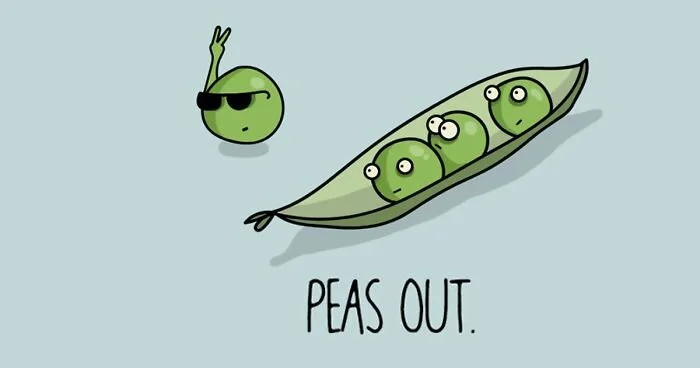
Introduction
Humor is one of the most fascinating aspects of human communication. It connects people, creates memorable experiences, and makes everyday conversations more enjoyable. Among the many forms of humor, wordplay holds a special place because it transforms ordinary language into something unexpected. A simple sentence can suddenly carry two meanings, encouraging the listener to reconsider what they just heard. This surprising shift often produces laughter, even when the joke seems incredibly simple.
Puns are particularly interesting because they combine language, psychology, creativity, and cognitive processing. Unlike humor that depends primarily on physical actions or exaggerated situations, this type of comedy challenges the brain to recognize different meanings within the same expression. The listener must understand the original context, notice the linguistic twist, and connect the alternative interpretation to the joke. These mental processes can happen within seconds, making wordplay a fascinating subject for researchers studying language and humor.
Modern psychology and neuroscience offer valuable insights into why people enjoy clever language tricks. Researchers have explored how the brain recognizes ambiguity, processes unexpected information, and experiences amusement. Although humor remains highly personal, scientific theories help explain why certain jokes generate immediate laughter while others produce only a polite smile. Understanding these mechanisms reveals that even the simplest wordplay involves sophisticated mental activity.
Understanding the Psychology of Wordplay
How the Human Brain Interprets Double Meanings
Language is usually designed to communicate information clearly. When someone speaks, the listener uses vocabulary, grammar, context, and previous experiences to determine the intended meaning. However, humorous wordplay deliberately disrupts this process by introducing an unexpected interpretation. A sentence that initially appears straightforward suddenly becomes meaningful in a completely different way.
Consider the familiar joke, “I used to be a baker, but I couldn’t make enough dough.” The word “dough” refers both to a baking ingredient and, informally, to money. The brain initially follows the baking context before recognizing the financial interpretation. The resulting shift creates a humorous connection between two otherwise separate ideas.
This process involves semantic ambiguity, which occurs when a word or phrase supports multiple interpretations. The brain must select the appropriate meaning based on context while remaining flexible enough to recognize alternatives. When the second interpretation becomes clear, the listener experiences a small moment of discovery. That discovery is often responsible for the pleasure associated with clever language-based humor.
Why Unexpected Connections Create Amusement
One influential explanation of humor is known as incongruity-resolution theory. According to this approach, people often find something amusing when it violates their expectations in a way that can be understood or resolved. The joke introduces an unusual connection, and the listener experiences satisfaction upon recognizing how the different meanings fit together.
For example, consider the sentence, “The bicycle couldn’t stand on its own because it was two-tired.” The expression sounds like “too tired,” but it also refers to a bicycle having two tires. The humor emerges from recognizing the connection between a physical characteristic and a familiar expression describing exhaustion.
Not every unexpected statement is funny. If the connection is impossible to understand, the listener may simply feel confused. Effective wordplay therefore requires a balance between surprise and clarity. The alternative meaning should be unexpected enough to create interest but understandable enough to provide a satisfying resolution.
The Neuroscience Behind Language-Based Humor
Brain Regions Involved in Understanding Jokes
The human brain uses several interconnected systems when interpreting humor. Language-related regions help recognize words, sentence structures, and meanings, while other networks contribute to attention, interpretation, emotional responses, and reward processing. Scientists have used techniques such as functional magnetic resonance imaging to investigate how these systems respond when people encounter jokes.
Research suggests that areas of the temporal lobes contribute to language comprehension and semantic interpretation. Regions of the frontal cortex can help evaluate context, manage competing interpretations, and recognize unexpected relationships. Meanwhile, brain networks associated with reward and emotion may become involved when a joke is experienced as amusing.
These findings suggest that Puns engage more than basic vocabulary knowledge. Understanding them can require flexible interpretation, contextual awareness, and emotional evaluation. However, researchers do not identify a single brain region responsible for humor. Different jokes and experimental tasks can activate different combinations of neural systems.
The Connection Between Humor and the Brain’s Reward System
Recognizing a clever joke can create a pleasant emotional experience. Scientists studying humor have observed activity in brain regions associated with reward, including parts of the ventral striatum, during amusing experiences. These systems also contribute to motivation, learning, and responses to enjoyable events.
Dopamine is an important neurotransmitter involved in reward-related processes, but it would be an oversimplification to claim that every joke directly causes a measurable dopamine surge. Brain imaging studies generally measure changes associated with neural activity rather than directly measuring dopamine release during ordinary laughter.
Nevertheless, reward-related processing helps explain why people actively seek entertaining conversations, comedy performances, and playful exchanges. When a surprising linguistic connection becomes understandable, the experience may feel satisfying. This positive response can encourage people to share the joke with others, strengthening the relationship between humor and social interaction.
Why Puns Make People Laugh Even When They Seem Silly
A distinctive feature of wordplay is that people sometimes laugh while simultaneously acknowledging that the joke is predictable or ridiculous. Someone may groan at a familiar joke and still smile. This reaction illustrates how amusement can emerge from several overlapping experiences, including surprise, recognition, social expectations, and appreciation of cleverness.
The popularity of so-called dad jokes demonstrates this phenomenon. These jokes often use obvious double meanings and deliberately simple structures. Their entertainment value does not always depend on originality. Instead, the predictable setup, exaggerated delivery, and listener’s anticipation can become part of the humorous experience.
For example, “I wondered why the baseball kept getting bigger. Then it hit me.” The expression “hit me” can describe both a physical impact and a sudden realization. Although the joke is straightforward, recognizing the double meaning creates a satisfying moment of understanding.
Humor also depends on the relationship between the speaker and the listener. A joke delivered by a close friend may be more entertaining than the same sentence spoken by a stranger. Facial expressions, timing, shared experiences, and cultural expectations influence whether people laugh, smile, or remain silent.
The Role of Cognitive Flexibility in Understanding Humor
Why Mental Flexibility Matters
Cognitive flexibility refers to the ability to adjust thinking when circumstances, information, or interpretations change. It allows people to move between different perspectives rather than remaining attached to a single explanation. This ability is particularly important when interpreting language that contains multiple possible meanings.
Puns often require listeners to reconsider their first interpretation and recognize another meaning that fits the context. This mental adjustment resembles processes used in creative problem-solving, where individuals must explore alternative approaches to reach a solution.
For example, the joke “A calendar’s days are numbered” works because the phrase describes both a calendar’s printed dates and the idea that something has limited time remaining. Understanding the humor requires recognizing two meanings without losing the relationship between them.
Although interpreting wordplay involves flexible thinking, it does not necessarily follow that regularly reading jokes produces lasting improvements in cognitive flexibility. Researchers would need carefully controlled studies to establish that type of training effect. What can be said is that wordplay provides an enjoyable opportunity to practice considering alternative interpretations.
How Language Knowledge Influences Humor Appreciation
Vocabulary, reading experience, cultural familiarity, and language proficiency all influence how people understand jokes. A person who recognizes multiple meanings of a word is more likely to understand a joke built around that ambiguity.
This explains why some wordplay becomes difficult to translate. Words that sound alike in English may have completely different pronunciations in another language. Similarly, expressions with multiple meanings in one culture may not have equivalent meanings elsewhere.
Children also develop their appreciation of language-based humor as their linguistic and cognitive abilities mature. Younger children may enjoy simple sound similarities, while older children increasingly recognize figurative expressions, ambiguity, and more complex verbal jokes.
Different Types of Wordplay and Their Cognitive Effects
Not all linguistic jokes operate through the same mechanism. Some rely on identical sounds, others depend on multiple meanings, and some use familiar expressions in unexpected contexts. Understanding these differences helps explain why certain jokes appeal to particular audiences.
| Type of wordplay | How it works | Example |
|---|---|---|
| Homophonic | Uses words with similar or identical sounds | A bicycle is two-tired. |
| Homographic | Uses the same spelling with different meanings | The fisherman went to the bank. |
| Compound | Combines several linguistic interpretations | The math teacher had too many problems. |
| Visual | Uses images and language together | A picture of a clock saying, “Time flies.” |
| Contextual | Changes the expected meaning of an expression | The calendar’s days are numbered. |
These categories can overlap, and individual jokes may use more than one linguistic mechanism. Their common feature is the creation of an alternative interpretation that the audience must recognize.
How Humor Supports Social Communication
Building Connections Through Shared Laughter
Humor serves an important social function because it creates opportunities for people to share emotional experiences. A well-timed joke can reduce conversational tension, encourage participation, and make interactions feel more relaxed. Shared laughter can also communicate friendliness and a willingness to engage.
In everyday conversations, Puns can provide a lighthearted way to introduce humor without requiring elaborate storytelling. A short joke about a familiar situation may be enough to encourage a smile and make an interaction more memorable.
For example, coworkers discussing a demanding schedule might appreciate a playful remark about being “pressed for time.” The expression becomes especially amusing when connected to a printing task or another relevant activity. The humor works because everyone understands the immediate situation.
However, social context matters. Humor that feels appropriate among friends may seem distracting during a serious discussion. Successful communication requires recognizing the audience’s expectations and choosing the right moment for playful language.
Why Shared Knowledge Makes Jokes More Effective
Many jokes rely on common experiences. When speakers and listeners share cultural references, professional vocabulary, or familiar expressions, they can recognize humorous connections more quickly.
A joke about computer programming may entertain software developers but confuse someone unfamiliar with technical terminology. Similarly, medical professionals, teachers, and musicians often enjoy specialized wordplay related to their occupations.
This relationship between shared knowledge and humor helps explain why communities develop distinctive comedic styles. Inside jokes can reinforce a sense of belonging because understanding them signals familiarity with the group’s experiences.
The Relationship Between Wordplay and Creativity
Creativity involves generating ideas that are both original and meaningful within a particular context. Linguistic humor shares some of these characteristics because it encourages people to connect concepts that are not usually associated with one another.
Creating Puns requires attention to pronunciation, vocabulary, context, and unexpected associations. A person might begin with an ordinary expression and search for another interpretation that produces a humorous effect.
For example, someone working in a garden might say, “I’m rooting for you.” The phrase communicates encouragement while also referring to plant roots. The joke emerges from connecting a familiar supportive expression with the gardening environment.
Writers, advertisers, educators, and entertainers frequently use this technique to make language more memorable. A clever phrase can attract attention because it encourages audiences to think about its meaning rather than simply reading it.
Still, creativity and humor are not identical abilities. A person can be highly creative without enjoying verbal jokes, and someone who appreciates wordplay may prefer familiar examples over inventing original ones.
The Importance of Timing and Delivery
Even an excellent joke can fail when delivered at the wrong moment. Timing influences how the audience processes information and recognizes the unexpected interpretation.
A speaker may create a brief pause before revealing the final word, allowing listeners to establish an expectation. When the alternative meaning appears, the contrast becomes more noticeable.
Tone of voice also matters. A serious delivery can make a ridiculous statement more surprising, while an exaggerated expression may signal that the speaker is intentionally being playful.
Written humor works differently because readers control their own pace. Punctuation, sentence structure, and formatting can guide interpretation, but they cannot reproduce every feature of spoken delivery.
In digital communication, emojis and visual cues sometimes help indicate humorous intentions. They can reduce misunderstanding when a message might otherwise appear completely serious.
Puns in Modern Digital Communication
The rise of social media, messaging platforms, and short-form video has created new opportunities for language-based humor. People frequently encounter playful captions, humorous comments, memes, and brand messages built around double meanings.
Digital communication favors expressions that are short, recognizable, and easy to share. Wordplay fits these conditions because a clever joke can often be communicated in a single sentence.
Businesses also use humorous language in advertising to make promotional messages more distinctive. A bakery might use a phrase such as “We knead your support,” combining a familiar expression with a reference to preparing dough.
However, humorous marketing requires careful consideration. A joke that feels entertaining to one audience may appear confusing, outdated, or inappropriate to another. Effective brand communication depends on understanding the intended audience rather than assuming that every clever phrase will generate positive engagement.
Artificial intelligence has also become part of the modern humor landscape. Language models can generate jokes by identifying patterns, associations, and alternative word meanings. Yet producing grammatically plausible wordplay does not guarantee that human readers will find it amusing. Cultural knowledge, novelty, context, and audience expectations remain important factors.
Can Wordplay Improve Learning and Memory?
Educators sometimes use humorous examples to make lessons more engaging. When a joke connects directly to the material being taught, it may attract attention and provide an additional cue for remembering information.
Puns can be especially useful in vocabulary instruction because they highlight relationships between words, sounds, and meanings. A teacher explaining homophones might use a joke to demonstrate how similar pronunciation can produce different interpretations.
For example, “The librarian was booked all day” connects a familiar expression about a busy schedule with the setting of a library. Students can examine why the statement works and identify the meanings involved.
Humor may support learning under suitable conditions, but its effectiveness depends on relevance and presentation. An unrelated joke can distract students, while an overly complicated example may increase confusion.
For this reason, educational humor works best when it reinforces a concept rather than replacing a clear explanation.
Why Some People Enjoy Wordplay More Than Others
Humor preferences vary considerably between individuals. Some people appreciate sophisticated linguistic connections, while others prefer storytelling, observational comedy, physical humor, or satire.
Several factors can influence a person’s response to verbal jokes:
-
Language familiarity: Understanding vocabulary and expressions makes alternative meanings easier to recognize.
-
Cultural background: Shared references can influence whether a joke feels natural or confusing.
-
Personal preferences: Some people enjoy predictable humor, while others prefer originality.
-
Emotional state: Mood and immediate circumstances can affect the willingness to laugh.
Personality and previous experiences may also contribute to humor preferences. Someone who frequently enjoys word games or language puzzles may find verbal jokes particularly entertaining.
Nevertheless, disliking a particular joke does not indicate lower intelligence or weaker language skills. Humor appreciation is subjective, and even people with similar backgrounds can react differently to the same material.
The Science of Laughter and Emotional Well-Being
Laughter involves physiological and emotional processes that extend beyond understanding a joke. It can include changes in breathing, facial muscle activity, vocalization, and autonomic nervous system responses.
Humorous experiences may also provide temporary relief from everyday tension. Sharing a funny moment can redirect attention away from stressful thoughts and create a more positive social atmosphere.
Researchers have investigated relationships between humor, emotional regulation, stress, and well-being. Some findings suggest potential benefits, although results vary according to the type of humor, study design, and individual circumstances.
It is important not to treat laughter as a substitute for medical or psychological care. Humor can be a valuable part of ordinary social life, but its effects should not be exaggerated into guaranteed health outcomes.
In this context, Puns offer an accessible form of entertainment that can be enjoyed during conversations, reading, or casual online interactions. Their appeal lies in the combination of mental recognition and emotional enjoyment.
Frequently Asked Questions
1. Why does the brain find wordplay funny?
The brain often finds wordplay amusing because it creates a difference between an expected meaning and an unexpected interpretation. When listeners recognize how the meanings connect, they may experience surprise and satisfaction. Language-processing systems help interpret the words, while emotional and reward-related networks contribute to the feeling of amusement.
2. Are puns a sign of intelligence?
Understanding complex verbal jokes can involve vocabulary knowledge, flexible thinking, and the ability to recognize alternative meanings. However, enjoying or creating these jokes is not a reliable measure of overall intelligence. Humor preferences depend on language experience, cultural knowledge, personality, and individual taste.
3. Why do people groan at dad jokes?
Dad jokes often use obvious or predictable linguistic twists. Listeners may recognize the joke before it is completed, creating a mixture of anticipation, amusement, and playful embarrassment. Groaning can become part of the social performance, especially when the speaker intentionally delivers a predictable joke with exaggerated confidence.
4. Can humorous wordplay help children develop language skills?
Age-appropriate wordplay can help children explore vocabulary, pronunciation, figurative expressions, and multiple meanings. It encourages attention to how language works and can make linguistic concepts more enjoyable. However, these activities should complement broader reading, conversation, and language-learning experiences rather than replace them.
5. Why are some jokes difficult to translate into other languages?
Many verbal jokes depend on pronunciation similarities, cultural expressions, or words with multiple meanings. These relationships may not exist in another language. Translators sometimes need to create an entirely different joke to preserve the humorous effect rather than translate every word literally.
6. Why are puns popular in advertising and social media?
Short verbal jokes can attract attention and make messages easier to recognize. Their unexpected meanings encourage audiences to pause and interpret the phrase, which can increase engagement. However, their effectiveness depends on clarity, originality, cultural relevance, and whether the humor suits the brand or communication setting.
Conclusion
The science behind verbal humor reveals how closely language, cognition, emotion, and social interaction are connected. What appears to be a simple joke often requires the brain to recognize ambiguity, reconsider expectations, and discover an unexpected relationship between meanings. These processes demonstrate the remarkable flexibility of human communication.
Puns are more than playful combinations of words. They illustrate how people use language creatively, recognize patterns, and share moments of amusement. Their effectiveness depends on several factors, including linguistic knowledge, timing, context, cultural familiarity, and individual preferences.
As digital communication continues to evolve, wordplay remains a versatile form of humor that can enrich conversations, support educational activities, and make everyday messages more memorable. Understanding why these jokes work offers a deeper appreciation of both human creativity and the complex mental processes behind laughter.